
Annual Gas Rate Adjustment Supports Smaller, Gradual Changes
Page summary
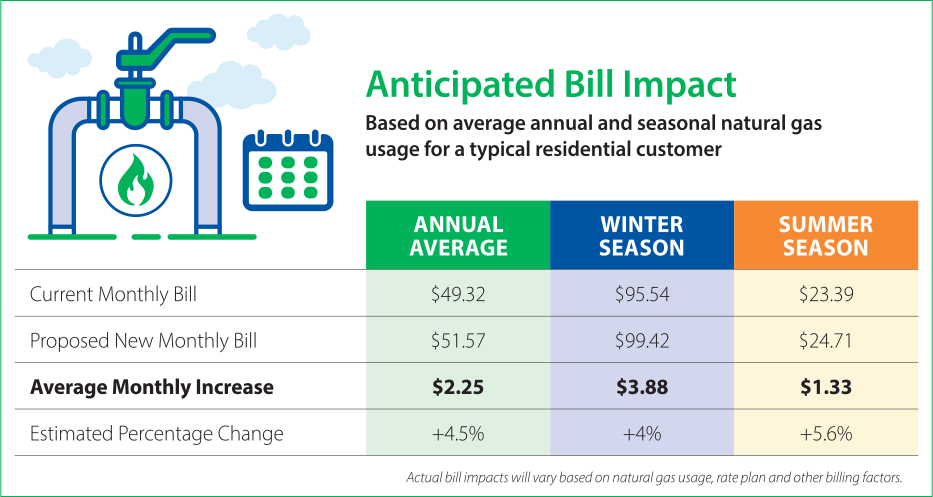
UniSource Energy Services explains how the new Annual Rate Adjustment Mechanism allows natural gas rates to be adjusted gradually based on actual costs, supporting predictable bills, continued infrastructure investment and ongoing regulatory oversight by the Arizona Corporation Commission. The first annual filing seeks to recover $41 million in investment over the past two years to support reliable gas service. If it is approved, the average residential customer with typical usage would see a monthly bill increase of about $2.25.
How have gas rates traditionally been set? It looks something like this:
Imagine you're in charge of a restaurant. Every week, you buy food, pay your employees and serve customers to keep your business running smoothly. You purchased a new ice cream machine, and you're paying higher prices for supplies and equipment. But instead of charging more, you’re told: “Keep all your receipts, and in three years, we’ll look at what you spent and then decide if you can change your prices to recover those investments.”
Companies like UniSource make big investments—like upgrading pipeline infrastructure or improving metering systems —to keep gas service reliable. But until recently, they don’t get reimbursed for additional costs until years later, after a lengthy public review process.
In 2026, state regulators approved a new method that would allow for those additional costs to be considered in a more timely way, in the interest of rate stability, gradualism and administrative efficiency.
The Annual Rate Adjustment Mechanism (ARAM) is based on the cost of providing service to homes and businesses. The ARAM will allow timely, systematic recovery of changing costs over time, smoothing out potential bill changes between rate proceedings.
All costs considered through this rate mechanism must be proven and justified. They also remain subject to oversight by the Arizona Corporation Commission (ACC) to ensure that only necessary, cost-effective investments and prudently incurred expenses are recovered.
Reducing the amount of time it takes for the ACC to consider such requests helps to keep capital investment costs down, which supports lower bills for all customers.
UniSource Energy Services in September filed its first ARAM application with the ACC, seeking a rate adjustment that would amount to about $2.25 per month for the typical customer. If approved, the adjustment would take effect in April 2027. See the full press release here.
Frequently Asked Questions
This page includes our quarterly capital additions, provided in accordance with the formula rate requirements. Information will be updated periodically as new data becomes available.
Previous Quarterly Reports
Pursuant to UNS Gas, Inc.'s Annual Rate Adjustment Mechanism, the Company has filed its Annual Update with the Arizona Corporation Commission.
See details for the annual meeting on September 22.
This page includes responses to prior data requests and informal challenges. In accordance with applicable requirements, information deemed confidential or competitively sensitive will not be publicly posted.
Sign up for updates to follow our progress and receive notifications as we post new information and filings related to our formula rate process.
Annual Meeting for the Annual Rate Adjustment Mechanism (ARAM)
The Company held its Annual Meeting for the Annual Rate Adjustment Mechanism (ARAM) on Sept. 22, 2026. Click here to view the video.